
Optimize your food and beverage supply chain with cutting-edge digital tools. Leverage IoT for real-time inventory tracking to prevent stock discrepancies. Use data analytics to forecast demand precisely and tailor offerings. Implement blockchain for enhanced traceability and accountability. Automate logistics with AI for efficient delivery and predictive maintenance. Integrate cloud-based platforms for seamless collaboration among stakeholders. Master these strategies, and you'll reveal the full potential of your supply chain efficiencies. Discover what's next in advanced supply chain management.
Highlights
- Implement IoT smart sensors for real-time inventory tracking to prevent understocking and overstocking.
- Use data analytics for precise demand forecasting and tailored product offerings based on consumer behavior.
- Leverage blockchain technology for enhanced traceability and transparency in supply chains.
- Automate logistics with AI and machine learning to optimize delivery paths and reduce operational expenses.
- Integrate cloud-based platforms for seamless stakeholder collaboration and accelerated decision-making.
Leveraging IoT for Real-Time Inventory Tracking
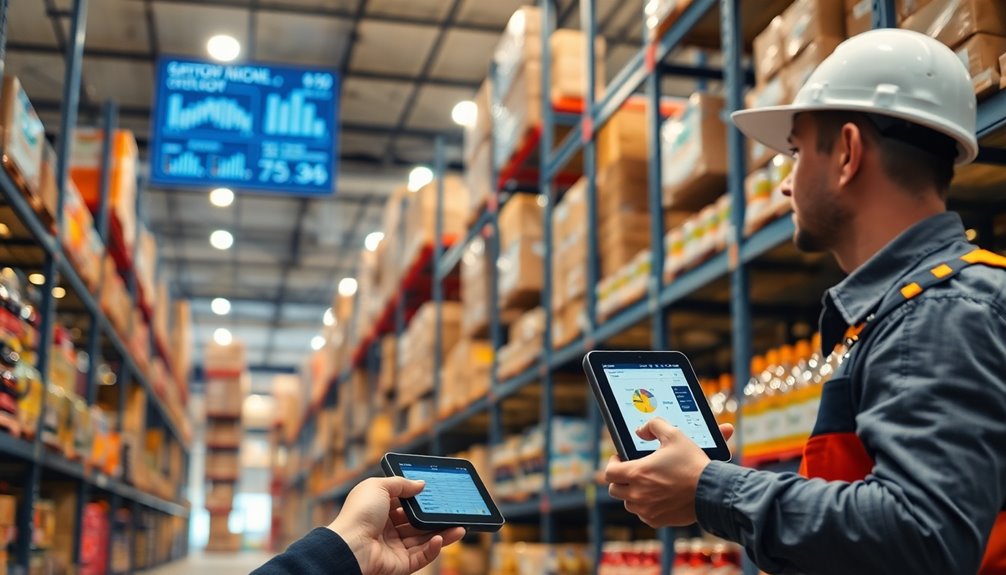
When it comes to optimizing supply chain efficiency in the food and beverage sector, leveraging IoT for real-time inventory tracking is a game-changer.
You'll find that smart sensors enhance inventory visibility, providing critical data that revolutionizes stock management. With IoT-enabled systems, you can monitor stock levels instantly and accurately—ensuring you're never understocked or overstocked. Additionally, data-driven decision-making allows businesses to adjust their inventory strategies based on consumer demand and trends.
Utilizing Data Analytics for Demand Forecasting
Harnessing the power of data analytics in demand forecasting can dramatically transform your supply chain strategy.
By leveraging predictive modeling, you can anticipate consumer behavior with precision. Here's how to optimize your approach:
Anticipate consumer behavior with precision by leveraging predictive modeling for optimized forecasting.
- Predictive Modeling: Use advanced algorithms to analyze historical data, identifying patterns that project future demand.
- Consumer Behavior Analysis: Monitor shifts in consumer preferences to tailor your product offerings and meet market demands proactively.
- Real-Time Data Integration: Integrate data from various sources for an all-encompassing view, enabling agile decision-making.
- Scalable Solutions: Implement scalable analytics tools that evolve with your business needs, ensuring you stay ahead in the competitive food & beverage industry.
Additionally, adopting automation solutions can further streamline your operations, making your supply chain more efficient and responsive to market changes.
Implementing Blockchain for Enhanced Traceability
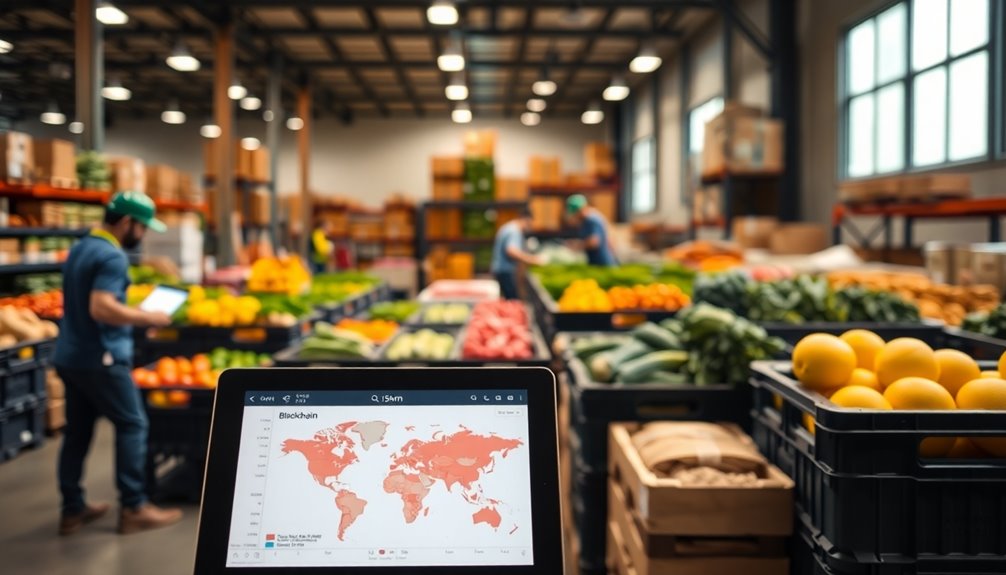
While data analytics sharpens your demand forecasting capabilities, integrating blockchain technology into your supply chain enhances traceability and accountability.
Blockchain's immutable ledger guarantees every transaction is recorded and verifiable, boosting supply chain transparency. By deploying smart contracts, you can automate compliance checks and streamline processes, reducing human error and increasing trust among stakeholders.
This technology allows you to track food origin, handling, and storage conditions in real-time, guaranteeing quality and safety standards are met. Embracing blockchain not only fortifies your supply chain but also aligns with consumer demand for transparency, offering a competitive edge in the food and beverage industry. Additionally, leveraging data-driven decision-making can further optimize your operational efficiency by providing insights into supply chain performance.
Automating Logistics With AI and Machine Learning
Integrating AI and machine learning into logistics operations revolutionizes the way the food and beverage industry manages its supply chain.
Revolutionize supply chain management in the food and beverage industry with AI and machine learning.
You're empowered to achieve greater efficiency through these innovations:
- Automated Routing: AI-driven systems analyze real-time data, optimizing delivery paths and reducing fuel costs.
- Predictive Maintenance: Machine learning predicts equipment failures, minimizing downtime and enhancing fleet reliability.
- Demand Forecasting: Accurately predict inventory needs, aligning production schedules with market demand.
- Cost Reduction: Streamline processes, cut operational expenses, and boost overall profitability.
Moreover, leveraging technology-driven execution ensures that these innovations are implemented effectively, leading to sustained growth and operational excellence.
Integrating Cloud-Based Platforms for Seamless Collaboration

As AI and machine learning continue to transform logistics operations, leveraging cloud-based platforms becomes a strategic move to enhance collaboration across the supply chain.
You need seamless cloud collaboration to guarantee all stakeholders—from suppliers to distributors—are on the same page. By integrating cloud solutions, you're enabling real-time data sharing and accelerating decision-making processes.
This approach optimizes project management by providing a unified platform for tracking progress, managing resources, and adapting to dynamic market demands. With cloud-based tools, your supply chain becomes more agile and efficient, paving the way for innovation and a competitive edge in the food and beverage industry. Additionally, utilizing platforms like monday.com can provide real-time business insights that further enhance decision-making and efficiency across your operations.
Some Questions Answered
How Can Digital Tools Reduce Food Waste in the Supply Chain?
You'll find digital tools essential for reducing food waste by leveraging food tracking systems and waste analytics. These technologies provide real-time insights, enabling strategic decisions and enhancing efficiency, ensuring your supply chain remains innovative and sustainable.
What Are the Cost Implications of Implementing Digital Tools in Supply Chain Management?
Ironically, while digital tools promise efficiency, the initial investment isn't pocket change. A thorough cost-benefit analysis is essential. You'll face implementation challenges, but strategic insight and industry knowledge can help you navigate these hurdles for long-term gains.
How Do Digital Tools Improve Supplier Relationships in the Food & Beverage Industry?
Digital tools enhance supplier relationships by facilitating seamless collaboration and effective relationship management. You'll find that these tools provide real-time data sharing, streamline communication, and foster strategic alliances, ultimately driving innovation and efficiency in the food & beverage supply chain.
What Role Does Cybersecurity Play in Digital Supply Chain Management?
Isn't protecting your digital assets vital? Cybersecurity protocols safeguard your supply chain, ensuring data protection against breaches. Strengthening these defenses not only secures sensitive information but also fosters trust and resilience in an evolving digital landscape.
How Can Digital Tools Enhance Sustainability Efforts in Food & Beverage Supply Chains?
You're looking to boost sustainability in supply chains, digital tools can streamline sustainable sourcing and enhance energy efficiency. By leveraging real-time data and predictive analytics, you'll drive strategic sustainability, ensuring innovation aligns with industry demands.
Summing Everything Up
In the food and beverage sector, optimizing supply chain management with digital tools is like having your cake and eating it too. By leveraging IoT for real-time inventory tracking, utilizing data analytics for accurate demand forecasting, implementing blockchain for traceability, and automating logistics with AI, you can enhance efficiency and transparency. Integrating cloud-based platforms fosters seamless collaboration across the board. Embrace these strategies, and you'll stay ahead of the curve, ensuring your supply chain runs like a well-oiled machine.